Archive for the ‘Taxes’ Category

In Accounting & Finances,Business,Education,Family,Taxes on February 21, 2013 by Sufen Wang Tagged: Certified Public Accountant, Enrolled agent, Google, Internal Revenue Service, irs, Preparer Tax Identification Number, Tax preparation, Tax returns
 RTRP Program Up in the Air: Testing and Continuing Education are Voluntary
Calling all Registered Tax Return Preparers! You know how the IRS now requires every paid tax return preparer to pass a competency test and meet continuing education requirements in order to be called an RTRP? Not anymore. On January 18, a federal judge ruled that the mandatory RTRP regulatory system is invalid because the IRS had to stretch a law to make it apply to preparers in the first place. Prepare to be very, very confused.
In short, the ruling means the IRS does not have the authority to license tax preparers. Which means that as of right now, according to the IRS, “tax return preparers covered by this program are not currently required to register with the IRS, to complete competency testing or secure continuing education.” The regulatory practice requirements for CPA’s, attorneys, enrolled agents, enrolled retirement plan agents, or enrolled actuaries are unaffected by the ruling.
 Required is the key word in all of this. The IRS filed a motion to suspend the injunction, which was denied on Feb.1 by the same judge. However, he did clarify that the IRS can allow preparers to “voluntarily obtain credentials that might distinguish them from other preparers.” Thus, the IRS’ testing and continuing-education centers will remain open. Indeed, it might be a good idea to complete the RTRP requirements anyways: the IRS can appeal the judge’s full ruling and his decision could eventually be reversed.
The judge also clarified that the injunction does not affect PTINs, which means that those requirements and fees are still active. The IRS has reopened the online PTIN system, but it’s being updated to reflect current requirements. All of this confusion comes at a bad time with tax filing season just ahead. Tax return preparers need answers from the IRS and they need them fast.
 And what does all this mean for us, the tax payers? Always check your tax preparer‘s background, credentials and ask for references! “Google” the tax preparer’s name and check out his/her background as much as you are able before you make the hiring. Just because it is NOT required to be licensed, does not mean that anyone off the street can and should prepare your tax returns! Hire a reputable tax preparer will paid off in the long run!
On the Money, Sufen Wang, Wang Solutions
M.S.Accountancy, Long Beach, CA 562-856-0793
In Accounting & Finances,Business,Education,Taxes on January 27, 2013 by Sufen Wang Tagged: Fraud, Identity theft, Internal Revenue Service, irs, Social Security number, Tax, Tax avoidance and tax evasion, Tax return (United States)
 Report Suspected Tax Fraud
To catch a thief, the IRS needs your help. If you suspect someone might be bending certain tax laws, don’t just stand there – do something! There’s a variety of tax frauds, so the IRS has conveniently created a chart to explain which form you’ll need to fill out in order to make the tax world a better place.
Direct your pen to Form 3949-A, Information Referral, if you suspect an individual/business of false exemptions or deductions, kickbacks, false/altered documents, failure to pay taxes, unreported income, failure to withhold, or organized crime. Then congratulate yourself on doing the right thing.
 Identity theft is also a type of tax fraud. If you believe that someone is posing as you and has used your SSN for employment purposes or to file a tax return, pick up Form 14039, Identity Theft Affidavit. The sooner you submit the form, the sooner the impostor will be caught.
Maybe your friendly neighborhood tax preparer has been getting rich a little too quickly. If you suspect fraudulent activity or an abusive tax scheme by a tax return preparer/company, report it on Form 14157. You’ll need both this form and Form 14157-A if you also think a tax return preparer filed or altered your return without your consent.
If you have information about a suspicious tax promotion or promoter, whip out Form 14242 and show that fake promotion who’s boss. And finally, if you notice misconduct or wrongdoing by an exempt organizationor employee plan, complain about it on Form 13909, Tax-Exempt Organization Complaint (Referral) Form.
 Reporting tax fraud is a good deed and should be reward enough by itself. However, for anyone who needs extra motivation, check out Form 211, Application for Award for Original Information. Sometimes it pays to be a whistleblower. Do the right thing, it is hard, but it is very, very rewarding!!!
Sufen Wang, M.S.Accountancy
Wang Solutions, Long Beach, CA (562) 856-0793
Editor: Hannah Huff, M.F.A. Creative Writing: Poetry, (626) 806-5805
In Accounting & Finances,Business,Family,Taxes on January 16, 2013 by Sufen Wang Tagged: Charitable organization, Donation, Internal Revenue Service, IRS tax forms, Itemized deduction, Salvation Army, Standard deduction, Tax deduction
 Happy New Year! But Wait!
Do not close the book just yet on year 2012…
Year 2012 is past us and hopefully you rang in the new year with a bang. Although the party is over, you can ensure you get more bang for every buck or item you donated in 2012 by reviewing these tips about year-end charity donations.
.
Contributions are tax deductible in the year made. As long as the donation was submitted before the end of 2012, it can be deducted for 2012 – even the check hasn’t been cashed or the credit card bill paid yet. However, take my word for it, the IRS won’t just take your word for charitable acts. To deduct monetary donations, you must have a bank record or written document from the charity with the name of the charity, the contribution amount, and the date.
.
Also be aware that deductible donations must be made to “qualified” organizations. Only churches, synagogues, temples, mosques, government agencies, and anything on the Exempt Organizations Select Check have the IRS’ seal of approval. So although you might have splurged on gifts for yourself, you still don’t count as a qualified organization – no matter how often you call yourself a charity case.
.
 Maybe you couldn’t spare some change and instead donated clothing or household items to a charity. In general, those items must have been in good used condition or better in order to be deductible. That means the bag of ratty old pajamas you left at the Salvation Army drop site probably can’t be deducted. And if you can’t get a receipt, at least keep a detailed written record of every donation.
 Remember that individuals can only claim deductions for charitable contributions if they itemize their deductions on Form 1040 Schedule A. That form will help you figure out whether itemizing is better than using a short form (Form 1040A and 1040EZ) to claim the standard deduction. Basically, you’ll have a tax savings only if the total itemized deductions (mortgage interest, charitable contributions, state and local taxes, etc.) exceed the standard deduction. Of course, whether or not you end up deducting your donations, giving is something you should do year-round.
Remember the old saying….”Spend a little, Save a little, and Give a little…”
On the Money, Sufen Wang, Wang Solutions
In Accounting & Finances,Business,Culture,Entertainment,Family,Taxes on December 14, 2012 by Sufen Wang Tagged: business, Christmas and holiday season, Gift, New Year, Small business, Sufen Wang, Super Saturday, Wang Solutions
 Seasonal Strategies for Your Small Business
‘Tis the season to spend time with family, but also ‘tis the season for shoppers to spend money on lots of presents. That means small businesses have to get down to business right now if they want the extra holiday business, especially since Super Saturday (December 22nd)– one of the biggest shopping days of the year – is close at hand.
 Special offers can easily increase your sales volume. Everybody likes any kind of discount, so come up with deals like “purchase one product and get the other at half price” or “buy one at full price and get a free gift to give.” A business that doesn’t sell seasonal products can be just as successful as one that does, as long as you promote your products as suitable gifts. You can also donate a portion of the price of your product to a charity so that customers feel they too are contributing to that charity. Hand out samples in exchange for customer’s e-mail addresses so you can send them promotions and keep them coming back after the holidays. Finally, get shoppers in the holiday – meaning spending – spirit by decorating your store and offering a free gift wrapping service.
 If you have a store website and social media pages, also decorate those with festive graphics and designs. Organize merchandise so that it’s easy for online buyers to find holiday gifts – for example, “Gifts for Him,” Gifts under $50,” etc. Use email, blogs, and web banners to make gift suggestions, and to showcase popular items and why people have to have them this holiday season. Offer downloadable gift certificates when holiday shipping deadlines have passed and use your site to make people want to visit your brick and mortar store.
 You should also be aware of several business-related tax credits and deductions that you’ll want to take advantage of before New Year’s Day. For example, did you know that you can get a tax credit for hiring an unemployed veteran before December 31, 2012? Or that Section 179 of the tax code provides tax benefits for equipment purchases made before the end of the year? Now would be a good time to review your equipment so you can replace any obsolete assets.
You can read this U.S. Small Business Administration bulletin to find out many more holiday marketing tips, answers to your small business tax questions, and more details on the above tax credits and deductions. If you feel stressed out in the coming weeks, just keep in mind that being busy is always a good thing when you’re a small busyness owner.
 Happy Holidays!
Sufen Wang,
Wang Solutions
In Accounting & Finances,Business,Culture,Family,Insurance & Liability,Taxes on November 23, 2012 by Sufen Wang Tagged: Emergency management, Employment, Gross income, Hurricane Sandy, Private foundation, Tax, Tax exemption, Taxable income
 Hurricane Sandy Qualifies as a Disaster: Victims Given Much-Needed Tax Relief
Just because Hurricane Sandy has disappeared from the Doppler radar does not mean its aftermath dropped off the map. Almost a month has passed, but many East Coast residents are still picking through debris on their lawns and others will be homeless for the holidays. The storm really was a disaster in many ways – which is why it has been designated as a “qualified disaster for federal tax purposes.”
 That’s actually good news: victims can exclude qualified disaster relief payments received from their employer (or anyone else for that matter) from their taxable income. So any payments used to repair homes or repair/replace the contents not covered by insurance, would not be included in the individual recipient’s gross income. This is also the case with any payments received for uninsured personal, family, living, or funeral expenses resulting from the storm. As a result, hurricane victims won’t have to worry about paying extra later when they’ve already lost so much.
Hurricane Sandy being named a “qualified disaster” will also help anybody trying to help the storm’s victims. Now, employer-sponsored private foundations can provide disaster relief to employee-victims in areas affected by the hurricane without having to worry that their tax-exempt status will change. An official list of those affected areas can be found here.
This tax relief is nice, but assistance for Hurricane Sandy victims shouldn’t stop there. Every cent does count, so donate whatever you can. Or if you don’t have a lot of money, volunteer a little of your time. It’s the season of giving after all.
 Happy Thanks–Giving….
Sufen Wang
Wang Solutions
In Accounting & Finances,Business,Taxes on November 19, 2012 by Sufen Wang Tagged: FTA, Internal Revenue Service, irs, IRS tax forms, Tax, Treasury Inspector General for Tax Administration, Waiver
The IRS Made it Hard to Find…
 Failed…
That’s the only word to describe the IRS’ actions concerning penalty forgiveness. How else could you explain forgetting to inform 1.45 million taxpayers that they qualified for and had a right to ask for relief from tax penalties totaling $181 million? If you’re like most people and have never heard of this tax penalty relief, here’s the reason why:
The IRS fines taxpayers when they don’t file a tax return or pay the full tax shown on any tax return. However, any taxpayers who have demonstrated full compliance over the previous three years can have these fines waved in something known as “first-time abate” (FTA). The only catch is that you need to first request the penalty waiver – and that’s hard to do if you don’t even know the waiver exists.
 And the IRS has certainly kept its lips zipped and its fine print invisible. The potential penalty relief is not mentioned anywhere on Form 1040, nor is it on the IRS website’s page about penalties, or on any balance due notices – not even within the text on those documents mentioning penalties for failure to file or pay. Even worse, over 90% of the people who actually did qualify for the penalty relief were not granted it.
Of course, the IRS’ failure does not mean that all taxpayers are perfect angels. The TIGTA found that a number of taxpayers who received the FTA waivers failed to fully pay off their taxes six months after the postponement. Accordingly, the TIGTA suggested that the IRS also use the FTA waiver as a compliance tool: make taxpayers aware of their potential to receive an FTA waiver based on their past compliance history and make receipt of the waiver dependent on taxpayers paying their current liability. That way, it’s a win-win situation for everyone involved.
If you to read all of the juicy legal tidbits regarding the TIGTA’s findings, you can check out the full report here.
On the Money, Sufen Wang, Wang Solutions
In Accounting & Finances,Business,Taxes on October 1, 2012 by Sufen Wang Tagged: Julian Jacobs, TurboTax
 Want to Use TurboTax as a Scapegoat?: It Won’t Work
Everybody knows that you shouldn’t blame other people – or things – for your own mistakes. Everybody except Bartlett apparently, who tried to blame TurboTax for her under reported income.
 First, Bartlett under reported her taxable pension distributions not by $101, not $10,001, but by $101,998! Then she got caught. Then she went to court and tried to get out of it, by arguing that she used the TurboTax software program to prepare her taxes, so it must be the software’s fault. Well, the court did not buy “that” argument. Tax Court Judge Julian Jacobs ruled against her, stating that the errors “were not computational…but were the result of Bartlett systematically under reporting her income.” (Bartlett v. Commissioner, T.C., No. 22669-10, T.C. Memo. 2012-254, 9/4/12.)
In other words, Bartlett couldn’t blame her “bad math” on a computer program: the software is only as good as the information entered into it. Garbage in, garbage out….. As a result, Bartlett was hit with a deficiency of $43,668 and an accuracy-related penalty of $8,734.
 Maybe Bartlett just wasn’t good with numbers. More likely, she wanted to cheat the system and tried to get smart when she got caught. Either way, the moral of the story is to double-check your numbers if you’re using a tax program – or better yet, just hire a professional tax preparer to file for you.
On the Money, Sufen Wang, Wang Solutions
In Accounting & Finances,Business,Culture,Entertainment,Taxes on September 8, 2012 by Sufen Wang Tagged: Gambling, IRS tax forms, Las Vegas Nevada, Little White Wedding Chapel, Lottery, Tax returns, Taxable income, Uncle Sam
 Your Winnings are Taxable Income
Welcome home from your Summer vacation. A special welcome home to all of you who spent your vacation in Las Vegas or at any of its alike gambling town. By now you should know that everything that happens in Vegas, doesn’t stay in Vegas. Hotel bills with hidden fees, a marriage at the Little White Wedding Chapel, and taxable gambling winnings which you must report on your income tax return, will all follow you back home. But hey, you win some, you lose some – and vice versa – you can also deduct your gambling losses.
A “gambling income” is exactly what it sounds like: any money you win from lotteries, raffles, horse races, casinos, etc. Even those lucky $20 grocery store scratch-offs count. And there’s no way to avoid the system. If you pass on the cash and choose a new SUV or 7-day trip to Cancun, you’ll still owe taxes on the fair market value of your prize.
 In general, you should record all your gambling winnings on the “Other income” line of Form 1040. So that’s where you’ll put down your $20 pay out from the grocery store scratch-off. But although all gambling winnings are taxable, some require extra paperwork. If you receive a certain amount of winnings or have any that are subject to federal tax withholding, you must get Form W-2G, Certain Gambling Winnings, from the payer. For example, you’ll need Form W-2G if you won $1,200 or more from bingo or slot machines.
 Now for something that will make your bank account feel a little better. You can claim your gambling losses (up to the amount of your winnings) on Schedule A, under “Other Miscellaneous Deductions.” So that’s where you would report the $20 bucks you spent on scratch-off lottery tickets before you finally won. If you do decide to deduct, don’t guesstimate; make sure you have documentation of your losses and winnings. So, folks, save all of your “losing” lottery tickets and scratchers!
To find out more about gambling and taxes, check out IRS Publication 529 on Miscellaneous Deductions. Remember that if Lady Luck is on your side, Uncle Sam will be waiting on your other side.
On the Money, Sufen Wang, Wang Solutions
In Accounting & Finances,Business,Culture,Entertainment,Family,Taxes on August 20, 2012 by Sufen Wang Tagged: Internal Revenue Service, IRS tax forms, Renting, Residential Rental Property, Tax, Vacation property, Vacation rental
Rent Smart and Take a Vacation from Taxes:
 Hopefully you were able to sneak away from work this summer and relax with your family at your vacation home: swimming, fishing, trying to keep up with the kids on breath-taking hikes. Unfortunately, it’s time to go home. The kids are tired of wearing sunscreen, and just want to go back to their air-conditioned rooms, and video games. Worse, your boss already sent you a dozen e-mails about what’s due next week. As you’re loading up the car, you wish you could find a renter to put the vacation home to good use for the last few weeks of summer.
Actually, that’s a very good idea. See, if you rent out your vacation home for fewer than 15 days a year, you don’t have to report it to the IRS. And if you don’t report something to the IRS, you don’t have to pay taxes on it. In other words, your rental income for 14 days or less is tax free.
 14 is the magic number though (or more specifically, 14 days, 23 hours, 59 minutes, and 59 seconds). Anything over that and you must report the income on Schedule E. So if Joe Schmoe Renter is really enjoying the lake house after two weeks and wants to stay longer, you have to decide if you want to deal with the hassle of kicking him out, or the hassle of filling out Schedule E.
If you choose the latter option, things get a little confusing. You have to start looking at how much you used the vacation home for personal use versus how many days it was occupied by a renter. Then you’ll be able to figure out how much you can deduct, which expenses you can claim, and how you report them. You can check out how to do the math on Publication 527: Residential Rental Property. If only vacation could always be all play and no work…

In Accounting & Finances,Business,Culture,Family,Taxes on August 10, 2012 by Sufen Wang Tagged: Alaska, Connecticut, Energy Star, Memorial Day, Oregon, Sales tax, Texas
Almost Better than Christmas…
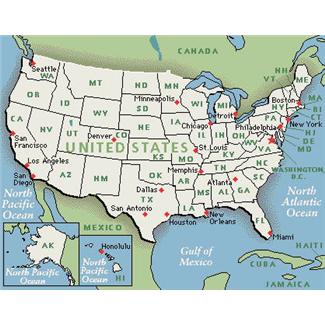
 A lot of people accept the fact there’s sales tax on most products and they pay it without complaint. Other people accept the fact that there’s sales tax, and they pay it, but grumble every time they do so. And then there are the people who order everything online so they don’t have to pay sales tax, or if they can’t find an item online, they drive around from city to city, looking for the one with the lowest sales tax rate. And finally, there are the die-hard-no-sales-tax believers, who have moved to Alaska, Delaware, Montana, New Hampshire, or Oregon by now, so they don’t have to worry at all about a state sales tax.
 Now is the perfect time for anyone in those last three groups to take an end-of-summer trip across the United States. Many states have an annual, back-to-school State Sales Tax Holiday where consumers can buy certain items without paying sales tax. For example, from August 10-11 in Georgia, you can purchase school supplies worth up to $20 each, clothing items up to $100 each, and computers worth up to $1,000 each, without having to pay – you guessed it – sales tax.
 In Connecticut, you have from August 19-25 to update your wardrobe – tax-free – on any clothing and footwear items under $300 each. While you missed your chance to buy a tax-free Energy Star air conditioner in Texas on Memorial Day weekend, you can still purchase tax-free clothing, backpacks, and school supplies ($100 max. cost each item) from August 17-19. Or you could just head over to Virginia anytime from October 5-8 to get your Energy Star products with no sales tax, at a maximum cost of $2,500. Louisiana had the best offer in the first days of August with all tangible personal property (pretty much any item you can think of under $2,500) tax-free.
 Unfortunately, there seems to be an absence of sales tax holidays on the west coast – perhaps that’s the price of good weather year-round. However, Georgia just got on the State Sales Tax Holiday bandwagon in 2012, so it’s likely that other states will participate in the near future. Texas, Connecticut, and the Carolinas have been doing this for over a decade, so if you missed the holiday this year, you can be pretty sure it will be back next year. That gives all of those “frugal” individuals out there time to look for the cheapest deals on flights and hotels.
Happy Shopping, Sufen Wang, Wang Solutions
 RTRP Program Up in the Air: Testing and Continuing Education are Voluntary
 Required is the key word in all of this. The IRS filed a motion to suspend the injunction, which was denied on Feb.1 by the same judge. However, he did clarify that the IRS can allow preparers to “voluntarily obtain credentials that might distinguish them from other preparers.” Thus, the IRS’ testing and continuing-education centers will remain open. Indeed, it might be a good idea to complete the RTRP requirements anyways: the IRS can appeal the judge’s full ruling and his decision could eventually be reversed.
 And what does all this mean for us, the tax payers? Always check your tax preparer‘s background, credentials and ask for references! “Google” the tax preparer’s name and check out his/her background as much as you are able before you make the hiring. Just because it is NOT required to be licensed, does not mean that anyone off the street can and should prepare your tax returns! Hire a reputable tax preparer will paid off in the long run!

















 Wang Solutions