Articles

Jasmine…

In Uncategorized on February 9, 2015 by Sufen Wang

Kitties 2012In Loving Memory of Jasmine

Jasmine_July 2012You may laugh at me and label me as the “Crazy Cat Lady.”  But Jasmine was a loyal companion, reliable, honest, no arguments, no disagreements, no surprises, minimum requirements for care with maximum love and affections guaranteed. Pets are hands-down the best candidate for a life partner. So, before you disregard another’s love and grief for his/her pet, perhaps you should adopt one and see what the fuzz is all about…

I met her when she was only 7 weeks old. She was a beautiful girl with long black and white hair, with extra toes for each of her front paw! I fell in love with her right away. She was very sweet and protective of me, following me everywhere around the house. Wherever I was, she wasn’t far behind, almost always within arm’s reach.

Every day, she was the first one to greet me in the morning, and the first one to welcome me when I got home from work. She hardly ever complained, just wanted her food and a visit to the patio for some sun and greens. She was not a picky eater by any means; however, she did have a bit of a stomach problem, poor girl.

She was very vigilant, and followed visitors everywhere, letting them know who was in charge of the house with her watchful eyes. She was not a big fan of the female species, but learned to tolerate them over time.

She adored the patio. She loved the greenery, the sunshine, and the birds. Once in a while, she caught a bug here and there for a snack. And how she loved to harass her little brother, Ripley, by chasing him around, showing him who was boss!

She was very light on her feet. She loved high places and loved to give me a heart attack when she was perched high above the stairs.

Dec 8, 2014She loved to be petted all the time, and her purrs were like a running stream from a mountain brook, the smoothest sound I ever heard. How I miss that sound, and her soft fur, her beautiful big eyes and her sweet, sweet nature. And how she loved watching TV with me, sitting right in front of the TV and blocking part of my screen with her head going back and forth following the programs.  I miss my best little girl, my companion for over 12 years. How I loved her, my gentle Jasmine, gone too soon and all too sudden.

Jasmine PlantNow she’s resting in a beautiful cedar box, in a big pot with a lovely flowering plant, sitting in her favorite spot on the patio, catching those sun rays every day. Oh, how I miss my Jasmine. Your little brother sure misses cuddling with you too, Jasmine.

Love always,

Mommy

(Jasmine lost the battle to cancer on Saturday, December 20th, 2014.)

Articles

IRS: Offer in Compromise

In Accounting & Finances, Business, Taxes on January 3, 2015 by Sufen Wang

You Can’t Judge an Offer in Compromise By Its Cover: Tax Court Decides IRS Must Review OIC Further
.
handshake_with_uncle_samA tax court recently took a hard line with the IRS when it came to the agency’s consideration (or lack of it) of an offer in compromise. A taxpayer can submit an offer in compromise if the IRS is seeking to collect an unpaid tax liability from them by lien or levy. The OIC allows the tax debt to be settled for less than the full amount owed. In this real life case, when Stacey and Timothy Bogart offered $10,000 as an OIC to promote effective tax administration, the IRS said, Nope.
.
handcuffsBut let’s backtrack. This all started when the bookkeeper for the Bogarts construction company embezzled $116,000 from 2006 to 2007. This stolen amount was obviously not reported on the couple’s income tax returns, and when the IRS discovered the discrepancy, there was trouble for the honest taxpayers. The agency assessed a tax deficiency of $69,309, not including interest. The bookkeeper got sent to the clink and was ordered to pay what he had stolen back to the Bogarts.
.
handmoneyExcept he didn’t give them a dime of the $116,000, which left the Bogarts in a bind. They did everything by the book and asked for a collection hearing, offering the $10,000 OIC to settle their 2006 and 2007 tax liabilities. This is when the IRS said nope to the offer, asserting that the couple didn’t have any economic hardship. But the Bogarts knew their rights as taxpayers: they petitioned the Tax Court for relief because the IRS doesn’t always have the last say in tax matters.
.
judgeOnce in the legal ring, the Bogarts entered a motion for summary judgment. Throwing a one-two punch, they argued that the IRS had to accept their ETA OIC as a matter of law under the circumstances, and if the summary judgment was denied, the IRS should be required to give their ETA OIC proper consideration, since it had failed to do so before. The IRS also entered a motion for summary judgment, and stuck to its rejection of the OIC as proper procedure.
.
So when does the IRS even have to consider an OIC? Well, there are three instances when the agency could compromise a tax liability:
.
1. When there is doubt concerning its existence or amount.
2. When its collectability is doubtful due to the taxpayer’s lack of assets or income.
3. When the compromise would promote effective tax administration.
.
All of these leave room for interpretation, but number 3 is where things get more than a little fuzzy. So let’s break it down again. There are two instances where the IRS could accept an ETA OIC:
.
3A. When full collection of the liability would bring the taxpayer down to economic rock bottom.
.
3B. When the taxpayer can identify compelling public policy or equity considerations to justify the compromise.
.
courtPoint 3B is where the IRS missed the mark. The court denied the IRS’ motion for summary judgment and also ruled that the IRS hadn’t given the ETA OIC all the consideration it deserved. The IRS didn’t consider whether the embezzlement was an exceptional circumstance under public policy or equity grounds. Also, going forward, the IRS will have to be more diligent about considering collection alternatives raised by taxpayers – instead of just sticking to the economic hardship script, as stats show that the agency tends to do.
.
bill (1)The Bogarts didn’t get a complete knockout, but definitely won the round. While the court rejected their motion for summary judgment, it held that the ETA OIC had not been fully considered and remanded it to the IRS to consider further. The Bogarts’ diligence and the court’s decision in their favor is a good example of why every taxpayer should understand their Taxpayer Bill of Rights, discussed in last week’s post.
.
Sufen Wang, M.S.Accountancy
Wang Solutions, Long Beach, CA (562) 856-0793
Editor: Hannah Huff, M.F.A. Creative Writing: Poetry, (626) 806-5805

Articles

“Taxpayer Bill of Rights”

In Accounting & Finances, Business, Taxes on December 21, 2014 by Sufen Wang

bill (1)Right On!: IRS Releases “Taxpayer Bill of Rights” in 6 Languages
 
The Tax Season is approaching fast, do you know your Rights?  Every American who pays taxes has a right to know how the heck paying taxes actually works. Tax laws written in plain English are difficult to understand even for native English speakers, let alone individuals who aren’t fluent in English, but nobody should have to throw up their hands up in dismay and remain confused.
 
That’s what the IRS “Taxpayer Bill of Rights” is all about – yes, for once the words “bill” and “tax” mean something good! Newly-revised and released as Publication 1, “Your Rights as a Taxpayer,” this cornerstone document outlines 10 key rights which every taxpayer should know they have under the tax law. And it’s freshly available in English, Spanish, Chinese, Korean, Russian, and Vietnamese. For your convenience, here’s a breakdown of the provisions:   
 
man-with-megaphone1. The Right to Be Informed
This is a biggie because tax laws change often. If you don’t have access to the most up-to-date tax info, or a way to understand that info, you’re not going to be able to file your taxes correctly – and that’s going to cause a trickle-down effect of problems. 
 
2. The Right to Quality Service
Plain and simple, doing business with the IRS might not be the most desirable activity on your day-planner, but it should never be a pain in the butt. If you don’t receive prompt and professional service from an IRS representative, you’re allowed to pull the “I’d like to speak to a supervisor” card.
 
tax house3. The Right to Pay No More than the Correct Amount of Tax
Not much more to be said here – the “correct” amount of tax is the “correct” amount. That being said, see Provision 4 below.
 
4. The Right to Challenge the IRS’s Position and Be Heard
The IRS isn’t always correct. The agency is also not the Big Bad Wolf. You can speak up if you disagree with the IRS’ position, and if you do everything by the book, you will be heard and responded to either way.
 
5. The Right to Appeal an IRS Decision in an Independent Forum
This goes hand-in-hand with the previous provision – you have the right to take away the IRS’ home court advantage and argue your case elsewhere.
 
6. The Right to Finality
Life is already filled with a lot of open-ended things, and deadlines having to do with taxes and audits definitely aren’t suppposed to be one of them. 
 
7. The Right to Privacy
This means you don’t have to worry about the IRS catching you with your metaphorical pants down. The IRS has to go through all the proper, legal steps when conducting inquiries, examinations, etc. – whatever action they’re taking against the taxpayer.
 
8confidential. The Right to Confidentiality
The information you give to the IRS is probably the most confidential data you have, except for maybe the log-in credentials to your significant other’s Facebook account. Accordingly, you should feel safe and sound giving your info to the IRS, and know that it will be kept secure.
 
9. The Right to Retain Representation
Don’t want anything to do personally with the IRS? You don’t have to – you’re not alone in this. Anyone can pick an authorized representative of their choice to deal with the IRS. 
 
10. The Right to a Fair and Just Tax System
You can bet your bottom dollar that this one’s the bottom line. Nothing is ever black and white, and the tax system is set-up to consider all your circumstances if you’re having trouble meeting your tax obligations. And you’ve always got a friend in the Taxpayer Advocate Service if you’re having tax trouble.
 
bill3In summary, the Taxpayer Bill of Rights takes multiple existing rights basically hidden in the tax code and groups them into 10 broad categories, making them way easier to find. The whole point is for every American to know and understand their rights under the tax law, and the IRS is taking one step towards this by making Publication 1, “Your Rights as a Taxpayer,” available in six languages.
 
IRS Commissioner John Koskinen said, “We believe that these rights are critically important for people to know and understand, and translating them into additional languages helps us reach even more taxpayers. We encourage people to take a moment to read the Bill of Rights.” Now that you’ve taken a moment, spread the word in as many languages as you know!
.
Sufen Wang, M.S.Accountancy
Wang Solutions, Long Beach, CA (562) 856-0793
Editor: Hannah Huff, M.F.A. Creative Writing: Poetry, (626) 806-5805

Articles

‘Tis the Season for Giving to Charities:

In Accounting & Finances, Business, Taxes on December 20, 2014 by Sufen Wang

12902Tax Tips for Deducting Year-End Donations

Hopefully you’ve been spreading joy by supporting charities all year long. But if you’ve put off being altruistic since your New Year’s resolutions, now is the time to get in the giving spirit – if you want to deduct donations on your 2014 tax return. That’s because contributions are tax deductible in the year made. So as long as you give to a charity before 12:00 a.m. on 1/1/2015, it can be deducted for 2014 – no matter if the check is still in the mail or the unpaid credit card bill is burning a hole in the filing cabinet.

gifts-keep-givingHowever, the IRS won’t just take your word for how nice you’ve been. Whether you donate $5, $500, or whatever amount of money, you must have a bank record or written document from the charity with the organization’s name, your contribution amount, and the date. Gifts of money can include cold hard cash, checks, electronic funds transfers, credit card charges, or even payroll deductions.  Just remember to get a written record of such donation.

Maybe you can’t spare some change and instead want to donate clothing or household items. In general, those items must be in good used condition or better in order to be deductible. After all, if something isn’t good enough for you to use, it won’t be good enough for somebody else to use.

Giving-DonationsOnce you drop off an armoire at the Goodwill or shell out money like it grows on trees to save a copse of Appalachian trees, you must get a written acknowledgment from the charity describing the items you contributed, among other things. You’ll need this record for any deductible donation of $250 or more, whether it’s money or property – and it’s in addition to the money documentation noted above.

All that being said, these donations must be made to “qualified” organizations. Only churches, synagogues, temples, mosques, government agencies, and anything which shows up on the Exempt Organizations Select Check have the IRS’ seal of approval. So although you might have splurged on gifts for yourself, you still don’t count as a qualified organization – no matter how often you call yourself a charity case.

MH900361224You should feel special if you donate a car, boat, or airplane to charity. In fact, the IRS has special rules for these types of donations. If the claimed value is more than $500, the deduction for the vehicle is generally limited to the gross proceeds from its sale, and you’ll need a Form 1098-C or a similar statement, such as a Bill of Sale, from the organization to attach to your tax return; otherwise, you can only deduct $500 for that classic car of yours.

111810-charityIndividuals can only claim deductions for charitable contributions if they itemize their deductions on Form 1040 Schedule A. Of course, whether or not you end up deducting your donations, giving is something you should do year-round. And remember, “It’s not how much we give, but how much love we put into giving.”


Sufen Wang, M.S.Accountancy
Wang Solutions, Long Beach, CA (562) 856-0793
Editor: Hannah Huff, M.F.A. Creative Writing: Poetry, (626) 806-5805

Articles

Employee Health Cover Forms….

In Accounting & Finances, Business, Human Resources, Insurance & Liability, Taxes on December 2, 2014 by Sufen Wang

untitledAn Apple a Day Sure Doesn’t Keep Paperwork Away: IRS Releases Draft Employee Health Coverage Forms
With health care, comes a huge stack of forms to fill out – generally when you’re not feeling too well in a waiting room surrounded by folks who aren’t lookin’ too good either. Unfortunately, the IRS is adding to the paper stack with draft versions of Form 1094–B, Form 1095-B, Form 1094-C, and Form 1095-C.
 .
First Aid KitAlthough these forms for reporting employee health coverage don’t have to be filled out in the ER lobby, employers will have to spend time completing several of them – which will take precious time away from business operations. And these forms arrive on the coat-tails of the already in-effect requirement for employers to report the cost of health insurance on Form W-2.
 .
inoutWhere did this lovely paperwork come from? The Affordable Care Act requires that employee health plans meet certain requirements, with the reporting rules set by tax code sections 6055 and 6056. Down the road, employers with 50 or more full-time / full-time equivalent employees will be penalized if they don’t offer health coverage which meets minimum value and affordability standards. goodgriefTo prove that everything is A-okay, employers will have the pleasure of filling out Form 1094-C, Transmittal of Employer-Provided Health Insurance Offer and Coverage Information Returns, and Form 1095-C, Employer-Provided Health Insurance Offer and Coverage. Health insurance companies get to fill out Form 1094–B, Transmittal of Health Coverage Information Returns, and Form 1095-B, Health Coverage. 
 .
Stress-test-cartoonIf it sounds confusing, it’s because it still is. Keep in mind that these are draft forms, with no instructions available yet. According to the IRS, “In accordance with the IRS’ normal process, these draft forms are being provided to help stakeholders, including employers, tax professionals and software providers, prepare for these new reporting provisions and to invite comments from them. The draft instructions relating to the forms were posted to IRS.gov in September. Both the forms and instructions will be finalized by the end of this year.” All this means that the paperwork still needs work in 2014, and thus reporting is voluntary, but there’s no avoiding it when it’s set in stone in 2015. 
.
Sufen Wang, M.S.Accountancy
Wang Solutions, Long Beach, CA (562) 856-0793
Editor: Hannah Huff, M.F.A. Creative Writing: Poetry, (626) 806-5805

Articles

Thinking About Moving?

In Accounting & Finances, Business, Family, Taxes on October 14, 2014 by Sufen Wang

movingThese State Tax Rates Will Make You Think Twice
 
Home is where the heart is. It’s also where you pay taxes. Before you go searching for greener pastures, check out this breakdown of some of the states with the highest tax rates in the nation.
 
tax houseA lot of folks spend their days California dreamin’, ready to head west and strike it rich in the nation’s most populous state. But living in the Golden State comes at a high price in the form of taxes. With the state income tax ranging from 1% to 13.3%, and the state sales tax currently at 7.5%, California life isn’t so easy on the pocket. Note that the 1% income tax rate is only fair game up to $7,582 for individuals and $15,164 for married joint filers; after that it just goes up and up and up. And remember, that sales tax is also just the minimum – when you look at local taxes in individual cities and counties, the sales tax can jump to as high as 10%.
house_money1Even worse, living in California means spending half the time living in a car, but residents don’t even get a break on driving-related taxes. CA has the highest annual vehicle license fee (VLF), along with the highest gas taxes in the United States, at 53 cents a gallon versus the national average of 31 cents.  Furthermore, although Californians get a nice little break in property taxes with the first $7000 of the home’s value exempted, the property is so darn expensive in the first place, this little bit of tax relief doesn’t even make a dent. Traffic, a high cost of living, and expensive real estate – what more could you ask for?
 
newjerseyCalifornia’s pretty bad, but the east coast has its fair share of tax-unfriendly states. New Jersey has the highest property taxes in the country, with the average tax amount on the state’s average home value of $348,300 coming in at $6,579. Connecticut is close behind with the second-highest property taxes, with the average tax on the state’s average home value of $291,200 at $4,738. connecticutConnecticut’s gas taxes are also hot on the heels of California, at 49 cents per gallon, and although there are no local sales taxes, residents pay a state sales tax of 6.35% on most items. New Jerseyans have it lucky when it comes to gas taxes and fees, only paying 15 cents per gallon, but the 7% state sales tax coupled with additional taxes and fees in areas like Atlantic City, make it tough to survive in the Garden State.
 
newyorkNew York, New York, big city of dreams…and the highest combined state and local taxes in the country. New York’s state income tax ranges from 4% to 8.82%, and although the state sales tax of 4% doesn’t sound too shabby, local jurisdictions tack on additional sales taxes from 3% to 4.75%. Smokers also are going to want to pick a different state – any state – other than New York to live in. The $4.35 tax on cigarettes is the highest in the nation, and New York City adds an extra $1.50 tax to each pack. Yikes! 
 
Rhode Island is a tiny state with some pretty hefty tax rates. The 7% state sales tax applies to most items, including vehicles, and the Ocean State has the seventh-highest median real estate taxes. Maine is also up there – and not just in terms of geography. The Pine Tree State lowered the income tax from 8.5% to a maximum 7.95% last year, but single taxpayers only have to make $20,900 before they become eligible for that lovely tax rate prize. And Maine also charges an annual vehicle excise tax, which can run into the hundreds of dollars each year.
 
hawaiiIf you’re ready to abandon the first 48 and head off for a permanent tax vacation in Hawaii, maybe hold off on that one-way ticket. Hawaii’s gas taxes average around 48 cents a gallon, giving California a run for its money. Hawaii also has a top income tax rate of 11%, and pretty much everything other than prescription drugs is taxed – including services and food. Even California doesn’t tax its food! The good news is that Hawaii’s property taxes are low, with the median property tax on the state’s median home value of $517,600 coming in at $1,324.
 
Bear_CaliforniaOf course, all of these states have a lot to offer beyond high taxes. However, if you’re considering moving to save money, don’t forget to take into account the full gamut of each state’s taxes, from income, to sales, to property, to gas. Otherwise home sweet home could become home bittersweet home.

Sufen Wang, M.S.Accountancy
Wang Solutions, Long Beach, CA (562) 856-0793
Editor: Hannah Huff, M.F.A. Creative Writing: Poetry, (626) 806-5805

Articles

Get a Receipt!

In Accounting & Finances, Business, Taxes on September 9, 2014 by Sufen Wang

Help the BOE Fight Sales Suppression
 
internet-32340_640From hackers to spammers to identity thieves, the digital frontier has its fair share of outlaws. Luckily most folks are becoming aware of such vulnerabilities in the electronic arena, and taking precautions to level the playing field. However, there’s one type of hybrid digital and brick and mortar crook who most taxpayers don’t even know exists – and so don’t even realize how they’re getting the short end of the stick.
 
cashier_6These wizards, a.k.a. local business owners, use “zappers” (sales suppression software) to make sales transactions magically disappear and change in their electronic Point of Sale (POS) recordkeeping systems. They then under-report their taxable sales by making it look like they sold less than they actually did, and Presto!, they pay less taxes than they should. Due to these businesses waving their crooked wands, California gets cheated out of tax dollars used to make life run smoothly for all its residents. And this whole trick happens while other taxpayers pay their fair share of sales tax.  So, they are not only cheating the State, but also rubbing you by keeping your tax money paid to them.
 
bookreaderIt’s obviously illegal to cook the books, and it’s harder to catch when it’s done electronically. However, the California State Board of Equalization (BOE) – the only publicly elected tax commission in the United States – are the go-to folks for identifying these tax criminals. The process is simple: undercover BOE auditors visit suspected businesses and buy merchandise. If they detect the use of zappers, the reported sales amounts is disregarded, and the BOE goes into full-blown audit mode, calculating sales based on things like cash to credit card payment ratios, purchase information obtained from suppliers, daily sales averages, etc.
 
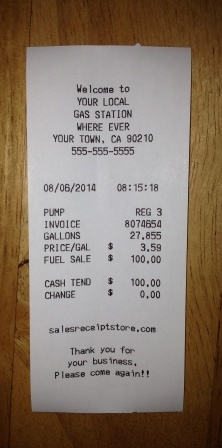
narrow-gasoline-receiptHowever, BOE auditors can’t be everywhere at once – which means that everyday consumers will have to join the fight. It’s as simple as asking for a receipt when purchasing merchandise. Going paperless is great for the environment, but it also makes it easier for businesses to wipe that bag of chips you just bought right off the sales transaction map. Asking for a receipt, especially when you pay with cash, discourages dishonest businesses from fudging their electronic records and helps the BOE identify those businesses. After all, you’ve got the hard evidence in-hand – even if the snack you bought is already in your belly. 
 
tax evasionhandcuffsAnyone caught using illegal sales suppression software could go to jail, be fined, and have to pay all illegally withheld taxes owed, including penalties and interest. If you suspect sales evasion, save your receipt and contact the BOE’s Tax Evasion Hotline at 1-888-334-3300. Everybody has to play by the same set of rules, so help the BOE give these tax crooks what they deserve!
.
Sufen Wang, M.S.Accountancy
Wang Solutions, Long Beach, CA (562) 856-0793
Editor: Hannah Huff, M.F.A. Creative Writing: Poetry, (626) 806-5805

Articles

Raising the Minimum Wage Will…

In Accounting & Finances, Business, Human Resources on August 15, 2014 by Sufen Wang

Lead to Job Loss and Small Business Closures!

 
wageThe raising of the minimum wage to $15.00 has been in the news a lot lately and I just have to put in my two cents on this matter. For reasons unknown, the media and the White House are not addressing the following issues when promoting a raise in the minimum wage:
 
1 – For every payroll dollar the employer dishes out, at least another 12 cents in out-of-pocket payroll expenses rides on that dollar’s coat tail. The employer has to match the employee’s Social Security and Medicare contribution, state employee training tax, state unemployment tax, and federal unemployment tax.
 
paycheck22 – For every employee hired on payroll, the employer has to pay insurance coverage accordingly. Worker’s Compensation Insurance and General Liability Insurance are both calculated based on gross payroll dollars, not to mention the now-mandated Health Insurance coverage.
 
3 – For every employee hired on payroll, the employer has to pay for additional office space, office supplies, computer and/or tool usage, and utilities.
 
The above are just a few costs of having an employee on payroll. Since our great nation is made up of small businesses, raising the minimum wage to $15.00 will force Mom-N-Pop shops to lay off employees, cut back employee hours, or worse, shut down all together.
 
hardware0908I have a client who has owned a small hardware store for over 40 years. The most he can afford to pay his warehouse staff is between $10 to $13 hourly rates. And even with these rates, oftentimes when sales are slow, he will forfeit his paycheck to cover his employees – just so he can keep his staff in place.
 
closedforbusinessFast food places will be especially problematic. 99% of fast food restaurants are franchised and the franchisee does not make the millions mentioned in the media (such as the CEO of McDonald’s corporation). These franchisees pay heavy franchise fees based upon their gross sales – before any expenses and taxes. If the minimum wage is increased to $15/hour, they will have to cut down on staff, or worse, raise food prices. Pretty soon, fast food prices will be the same as a sit-down meal at your corner cafe; no more dollar-menus! The domino effect from raising the minimum wage to $15 is very scary and is a reality that this nation cannot handle. It will cause unemployment to rise and businesses to shut down.
 
fastfoodMy first job was flipping burgers at a video arcade in Downtown Los Angeles. I earned $1.40 an hour (lower than the mandated $2.00 an hour). However, I learned a lot of basic skills from that minimum wage job: how to take orders, how to follow orders, how to handle cash transactions, how to give good customer service, and how to clean up efficiently. I also knew that this burger-flipping job was not the final stop in my career.
 
The minimum wage law was initially put in place to protect and prevent any abuse in the workplace. It was not intended for an individual to stay at a minimum wage job and wait for the wages to increase, to be concurrent with the cost of living.
 
A minimum wage job is just a pit-stop along the career trip: a short pause for a worker to gather his bearings and acquire the skills needed to move forward to a better job, the next pit-stop, and so on and so forth. I picked up speed in the various trades I learned, as a burger-flipper and at other small part-time jobs, and I kept getting better and better at each pit-stop along my life track. And for each pit-stop along the way, I accumulated different useful skills to further my career. I have never thought about staying put at one job and waiting for the wages to rise to my liking. 
 
Laissez-faireThe job market should be Laissez-faire, where supply and demand between private parties are free from government restrictions, tariffs, and subsidies, with only enough regulations to protect property rights. The market should be free to satisfy the supply and demand solely dependent on the current economic environment.
 
In summary, the minimum wage is not designed to feed a family of four. It is supposed to get the market to a starting point – the key word being “starting.” It is supposed to help an individual gain footing for employment, and then he should move onward and forward. It is not designed for an individual to stay put, and expect the minimum wage earning to keep up with his standard of living and family expansion, as he moves through his life cycle. It is, after all, called “Minimum Wage” not “Maximum Wage.”
 
Sufen Wang, M.S.Accountancy
Wang Solutions, Long Beach, CA (562) 856-0793
Editor: Hannah Huff, M.F.A. Creative Writing: Poetry, (626) 806-5805

Articles

Performance Reviews 101

In Accounting & Finances, Business, Human Resources on August 1, 2014 by Sufen Wang

What to Expect When You Have to Meet Expectations:

Happy Applicant Who Got the JobCongratulations – you just got hired. The boss shakes your hand, then heads off to do what important people do. You’re left with the HR person, who hands you a giant pack of papers, tells you to read them carefully, and then heads off to do what other important people do. You, of course, carefully read page 1 of the document, and then skim the rest until your eyes alight on the signature line on the last page. Done! Now you’re free to go get paid.

But somewhere in that packet was a blurb about undergoing a performance review after 60 or 90 or whatever amount of days on the job. It may seem far away on your first day of work, but the weeks pass quickly, and before you even know how to properly use the copy machine in the office, you’re up for a performance review.

images (2)Wikipedia defines a performance review as “a method by which the job performance of an employee is documented and evaluated. Performance appraisals are a part of career development and consist of regular reviews of employee performance within the organizations.” But that all probably sounds like the wording in the job packet you breezed through. So basically, a performance review is just that – a review of your performance as an employee. The constructive criticisms and suggested improvements within the review are supposed to advance your continued career path with the organization.

surpise2That means that a performance review should NEVER be a surprise to you. It should be used as a career development tool featuring comments on past performances, good and bad. The conclusion should focus on continuing good aspects of the performance, and recommend improvement tasks and goals for areas needing further enhancement. These suggestions may include additional education, such as certain classes or certifications, and specific tools to help your day-to-day on-the-job performance be more effective and efficient.

670px-Give-a-Performance-Review-of-an-Employee-Step-12While the input of colleagues might be considered during your review, it’s your superiors who ultimately need to gauge how you’re doing. They’re the ones in charge for a reason. Above all, you should always know how you are doing at your job post. Your employer has a responsibility to guide your along your career and to end your performance review on a note of encouragement. After all, this will benefit both you and the people you work for!

Sufen Wang, M.S.Accountancy
Wang Solutions, Long Beach, CA (562) 856-0793
Editor: Hannah Huff, M.F.A. Creative Writing: Poetry, (626) 806-5805

Articles

New Form 1023-EZ: Small Charities

In Accounting & Finances, Business, Taxes on July 27, 2014 by Sufen Wang

backlog-thumb-250x254-3799Easy, Breezy, Beautiful, New Form 1023-EZ: Small Charities Get a Streamlined 501(c)(3) Application
 
The saying “less is more” isn’t just true in terms of design. It also applies to the application small charities must fill out to receive tax-exempt status. In this case, less application pages to fill out = lessened IRS processing times = more small organizations approved more quickly = more resources available to process larger organizations’ applications. In other words, everybody wins.
 
lessismoreThe IRS released the new Form 1023-EZ on July 1 after taking into account critiques from the tax community and those working with charitable groups. Approximately 70% of all applicants qualify to take the easy road with this streamlined form, including most small organizations with gross receipts of $50,000 or less and assets of $250,000 or less. And the 1023-EZ really is A LOT shorter than the standard Form 1023 – 3 pages versus 26 pages.
 
IRS Commissioner John Koskinen explained that “this is a common-sense approach that will help reduce lengthy processing delays for small tax-exempt groups and ultimately larger organizations as well. The change cuts paperwork for these charitable groups and speeds application processing so they can focus on their important work.”
 
bookreaderBefore July 1, every charitable group had to wade through the same, dictionary-sized application, whether it was a “small soccer or gardening club or a major research organization.” Then all those groups had to stand around and tap their feet while they waited for the IRS itself to wade through the same dictionary-sized application and grant tax-exempt status. The result was not just tons of wasted time, but a backlog of 60,000 501(c)(3) applications, many of which have been pending for nine months. 
 
charity2The new three-page application should speed things up for the more petite charitable groups, making a dent in that backlog, and freeing up resources to review applications from the big organizations on the block (does the Tea Party ring a bell?). The only question is whether a significantly shorter 501(c)(3) application will result in compliance risks. After all, that’s the reason why that 26-page application was there in the first place. 
 
But Koskinen stated that “we believe that many small organizations will be able to complete this form without creating major compliance risks. Rather than using large amounts of IRS resources up front reviewing complex applications during a lengthy process, we believe the streamlined form will allow us to devote more compliance activity on the back end to ensure groups are actually doing the charitable work they apply to do.”
 
road_runnerThe whole point of the new EZ form is for it to be fast and easy. Accordingly, the Form 1023-EZ must be filed online using pay.gov, and a $400 user fee is due at the time the form is submitted. The IRS recognizes more than a million 501(c)(3) organizations. Let’s hope this new form will lead to a million more charities being recognized – at a lot faster rate than before.
.
Sufen Wang, M.S.Accountancy
Wang Solutions, Long Beach, CA (562) 856-0793
Editor: Hannah Huff, M.F.A. Creative Writing: Poetry, (626) 806-5805